Al-Dubaikhi explained that inclusive communication is a fundamental pillar of service delivery for persons with disabilities. It goes beyond conventional communication to create an environment that accommodates diverse abilities and needs, respects the dignity and independence of beneficiaries, and ensures access to information and services through appropriate methods. This includes improving communication channels, developing staff competencies in interacting with persons with disabilities, and raising community awareness of the principles of respect, equality, and equal opportunity.
He added that Shumua Alamal is committed to embedding these principles across its educational and rehabilitation programs by addressing the needs of beneficiaries and their families and providing services tailored to individual abilities, thereby developing skills, strengthening independence, and promoting community inclusion.
Al-Dubaikhi noted that vocational empowerment for persons with disabilities is an important pathway toward economic and social participation. He stressed that effective vocational inclusion goes beyond providing a job opportunity; it requires preparing and qualifying individuals with disabilities, adapting the workplace, raising employee awareness, and developing procedures that support long-term employment and professional success.
In this regard, the Complex works to support the development of more inclusive workplaces through rehabilitation and training programs, professional and social skills development, and initiatives that strengthen independence and readiness for labor market integration. These efforts also include the Mowaamah Program, which focuses on workplace accessibility and adaptation, assessing workplace suitability for persons with disabilities, educating and training employees, and improving accessibility, communication, and organizational procedures to support employment opportunities and long-term professional sustainability.
He explained that successful vocational inclusion is a shared responsibility requiring coordinated efforts among rehabilitation institutions, the private sector, and relevant stakeholders. He highlighted the importance of building effective partnerships that enable persons with disabilities to demonstrate their abilities and skills and contribute more actively to national development.
Regarding educational and rehabilitation services, Al-Dubaikhi emphasized the importance of early intervention programs in identifying children's needs during the early stages of development and providing appropriate services for children and their families. These programs support the development of language, cognitive, social, and motor skills while strengthening future opportunities for learning and independence.
He added that addressing learning difficulties requires a thorough understanding of individual differences, identifying educational needs, and applying teaching and intervention strategies suited to each case. This must be accompanied by continuous monitoring and collaboration between specialists and families to help students overcome educational challenges, develop their strengths, and build confidence in their ability to learn and participate.
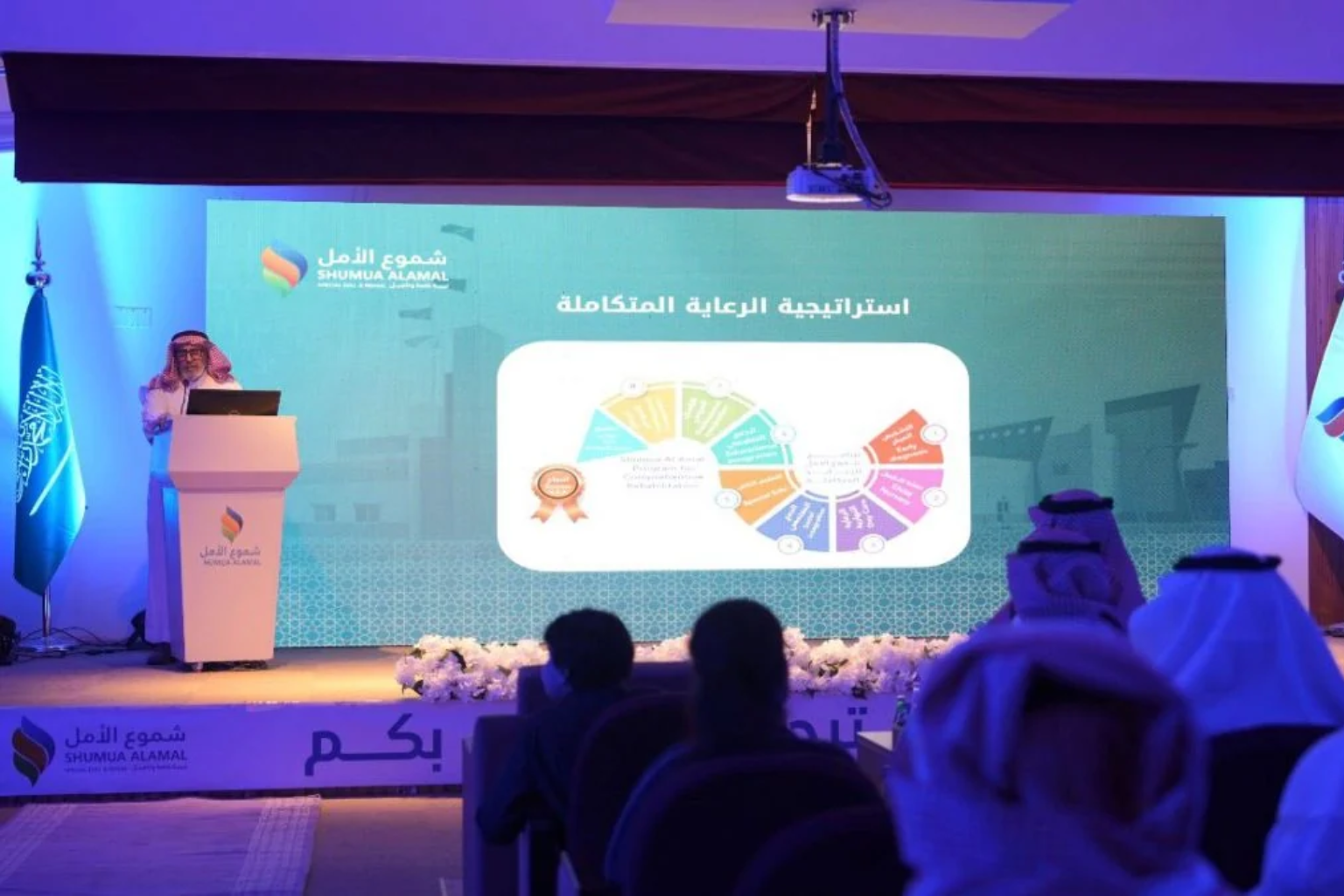
He explained that integrating special education, rehabilitation, early intervention, and learning difficulties services helps establish a progressive pathway that begins with identifying individual needs, continues through education, rehabilitation, and skills development, and ultimately promotes independence and social and vocational inclusion. This approach supports the Kingdom's direction toward improving services for persons with disabilities and enhancing their quality of life.
Al-Dubaikhi highlighted Shumua Alamal's commitment to initiatives and activities that provide persons with disabilities with opportunities to express their abilities, showcase their talents, and celebrate their achievements. Key initiatives include the Creativity Exhibition, Innovation Exhibition, and Holy Quran Competition, which provide supportive platforms for participation, demonstrating individual potential, and building self-confidence.
The Creativity Exhibition showcases beneficiaries' artistic and creative talents, allowing them to present their work to the community. The Innovation Exhibition promotes creative thinking and encourages ideas and projects that reflect their abilities and interests. The Holy Quran Competition is among the initiatives that encourage participation in meaningful activities, develop memorization and recitation skills, and strengthen the educational and moral values of participants.
He emphasized that these initiatives are more than supplementary activities accompanying educational and rehabilitation programs. They represent part of an institutional approach aimed at discovering abilities, recognizing achievements, and transforming societal perceptions of persons with disabilities by highlighting their talents, potential, and capacity to contribute and participate.
Concluding his remarks, Mr. Ahmed Al-Dubaikhi reaffirmed that Shumua Alamal's efforts in inclusive communication, education, rehabilitation, vocational inclusion, and community initiatives reflect the Kingdom's national commitment to empowering persons with disabilities, strengthening their participation across all areas of life, and creating the conditions that enable them to achieve their aspirations.
He noted that the next phase requires continued development of programs and services, stronger partnerships with government entities, private-sector organizations, and nonprofit institutions, and greater promotion of inclusion and equal opportunity. These efforts will contribute to building a society that values diversity, invests in the abilities of its members, and provides persons with disabilities with meaningful opportunities to learn, create, work, and participate in the development journey underway in the Kingdom of Saudi Arabia under Vision 2030.
Ministries are able to ensure the quality and safety of services provided, as well as achieve equality and justice. Supervision also helps promote comprehensive development and achieve national goals across various sectors.


We are always here to help you. Do not hesitate to contact us

 Home
